
Equipment Photos
GALLERY
Unauthorized reproduction, duplication, or modification of the information on this site is prohibited.
Gallery Menu
Equipment Photos
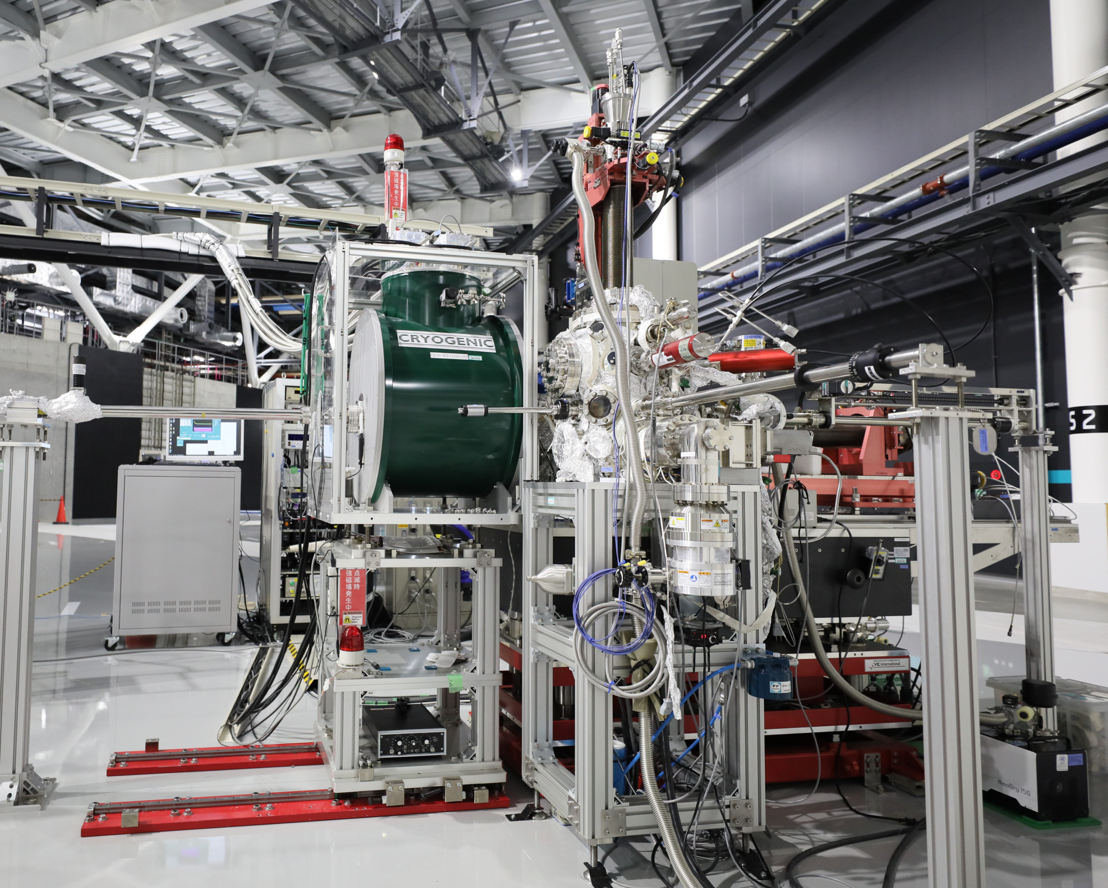
BL14UScanning Soft X-ray Microscope
This instrument specializes in magnetic imaging using circularly polarized soft X-rays at BL14U, and can apply a strong magnetic field of up to 8T to the sample. It can also be used as a general soft X-ray microscope, provided that the sample does not significantly degrade the vacuum when introduced into ultra-high vacuum. Currently, the maximum spatial resolution obtained is approximately 50 nm in the vertical direction and 100 nm in the horizontal direction. Furthermore, it is effective for observing fracture surfaces because unevenness of several micrometers on the sample surface is mostly within the depth of focus.
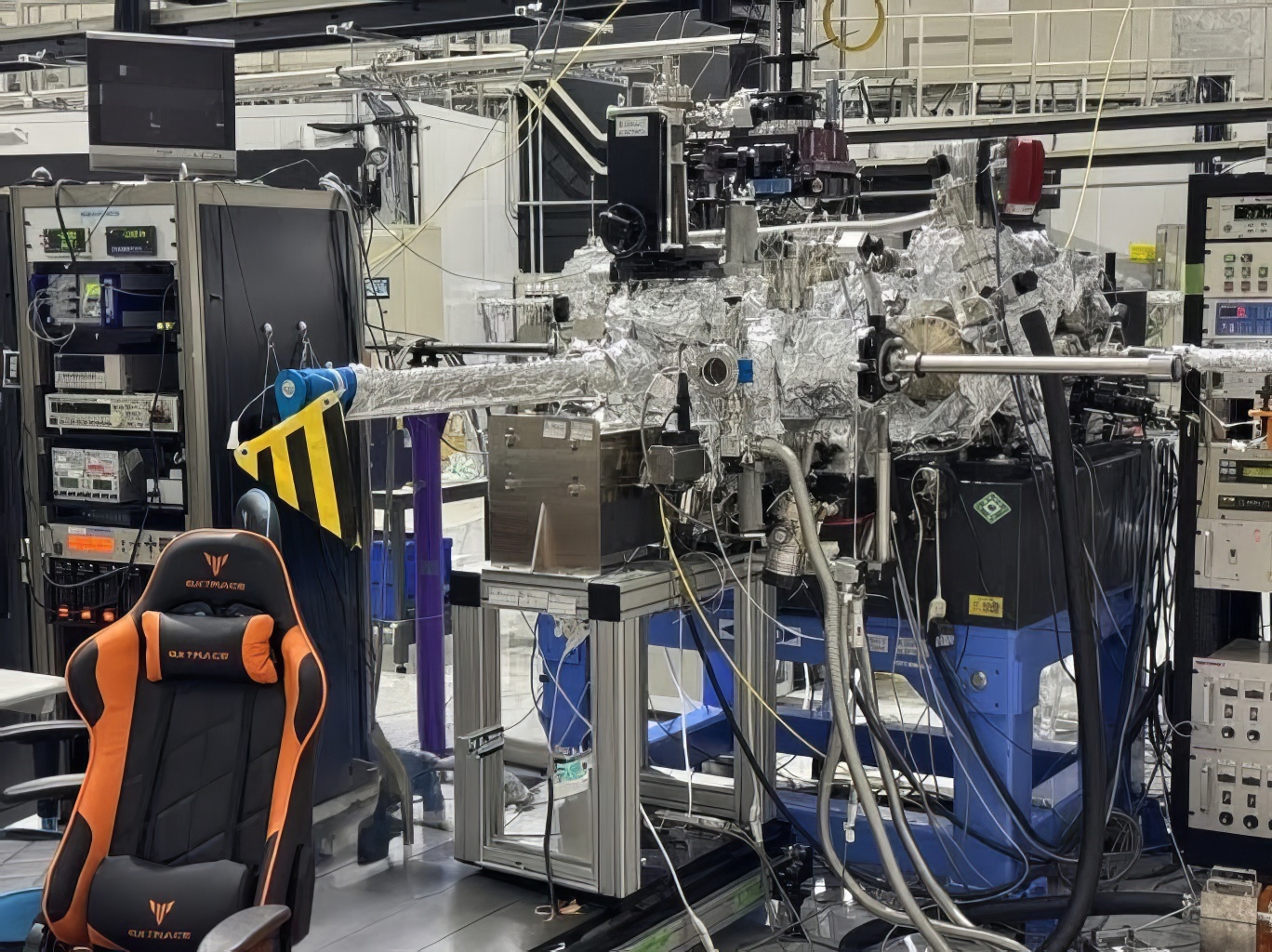
BL07U nano-ESCA
This instrument enables analysis of the electronic and chemical state distribution of materials with a spatial resolution of about 100 nm by focusing synchrotron soft X-rays to less than 100 nm using a Fresnel zone plate and scanning the sample with high precision in a two-dimensional in-plane direction using a 2-axis piezo stage introduced into ultra-high vacuum. In addition, combining VG Scienta's R3000 electrostatic hemispherical analyzer with an ultra-wide angle intake lens allows simultaneous capture of photoelectron emission angle dependence over a 60-degree range with a 1-degree angular resolution. It is equipped with 4-terminal electrodes under vacuum, supporting operando measurements with voltage application and variable temperature measurements.
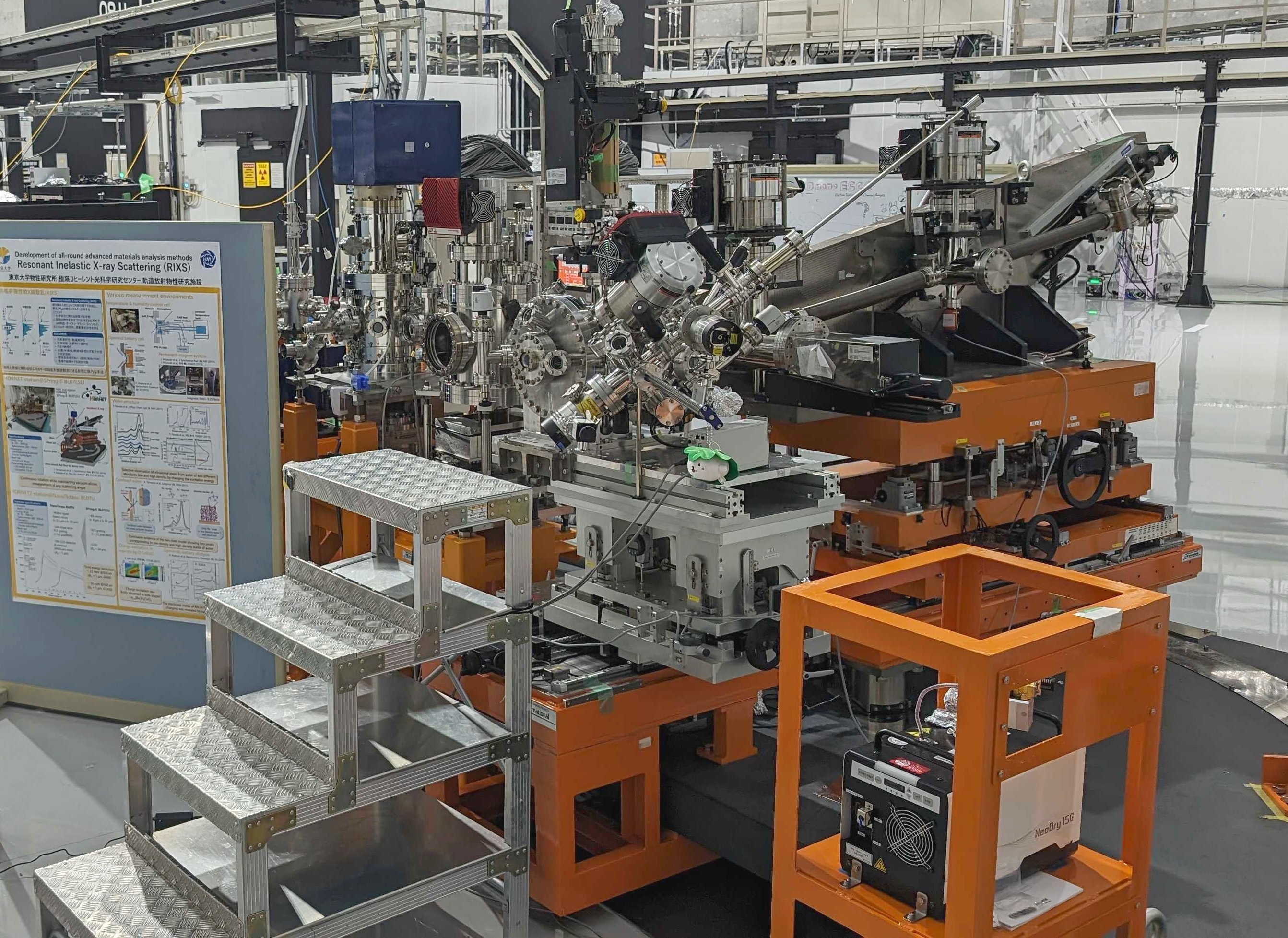
BL07U RIXS
This instrument can selectively obtain the valence electron states of light elements and transition metals contained in materials, regardless of whether they are inside solids, liquids, gases, or at interfaces. It is also possible to perform operando (under function) measurements by applying an electric field or permanent magnet magnetic field (< 0.25 T) to the sample and controlling the temperature (25 - 480 K) and humidity (0 - 100 %) environment. Furthermore, the use of vertically and horizontally linearly polarized light and left/right circularly polarized light enables the determination of molecular orientation and orbitals. Solution samples can also be measured at variable temperatures from 0 to 80 °C. The beam size at the sample position is approximately 5 μm x 50 μm.
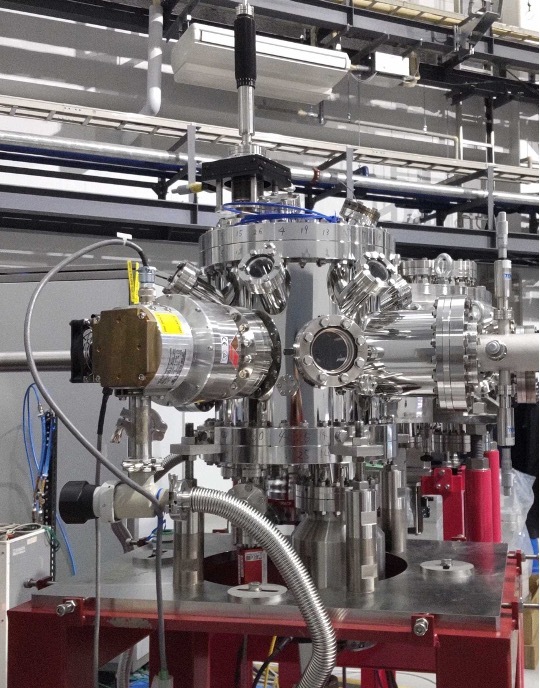
BL08U Operando Soft X-ray XAFS
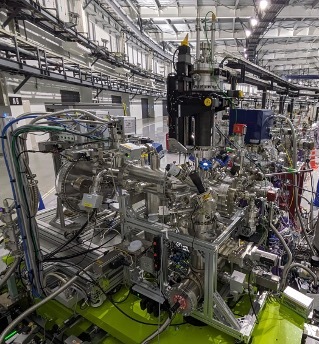
BL08U uses a variable polarization undulator as a light source, and soft X-rays with a photon energy of 0.18 eV to 2 keV can be used as vertically/horizontally linearly polarized light or left/right circularly polarized light. Two types of XAFS equipment, standard and advanced, are available. Both can perform XAFS measurements using the electron yield method and fluorescence yield method, enabling elemental and chemical state analysis of samples and determination of molecular orientation. The sample holder of the standard equipment can accommodate samples of 1 cm square. The advanced equipment shown in the photo is capable of sub-micron focusing and operando measurements, but prior consultation is required for specific experiments.
BL08U AP-XPS
This instrument is capable of soft X-ray photoelectron spectroscopy measurements from ultra-high vacuum to a gas atmosphere. It is used for elemental and chemical state analysis on the surfaces of catalysts and other materials. It monitors reactants and products based on a mass spectrometer and analyzes reaction intermediates in real-time. A sample preparation chamber is equipped, allowing for surface cleaning and sample evaluation by electron diffraction. The sample holder can accommodate samples of 1 cm square. The measurement temperature ranges from room temperature to 700 degrees, and the atmosphere pressure can be up to near atmospheric pressure. Since experiments with the photoelectron spectroscopy apparatus in a gas atmosphere depend heavily on conditions such as sample gas, prior consultation is essential.
BL08W Powder X-ray Diffraction
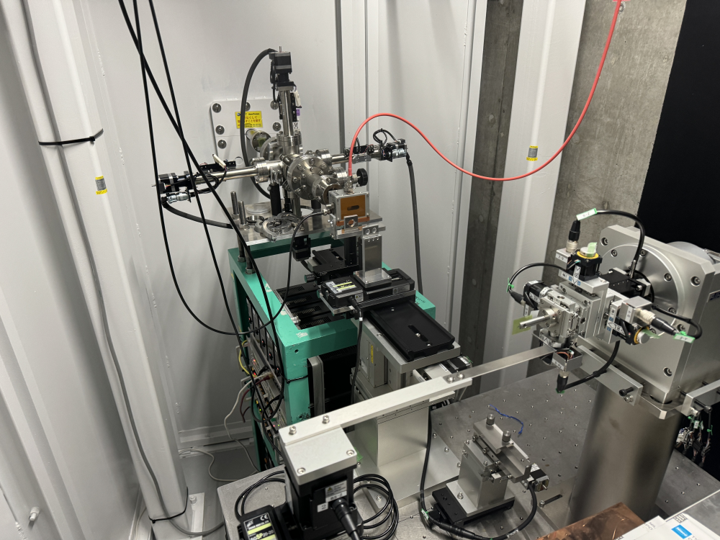
This is a powder X-ray diffraction instrument. Diffraction experiments can be performed using 17.5 keV (0.708Å) or 28.5 keV (0.405Å). Powder diffraction measurements of capillary-sealed samples are possible using a capillary spinner for powder diffraction and a two-dimensional detector. A large-area flat panel detector (Hamamatsu Photonics, pixel size 140 μm × 140 μm, detection area 430 mm x 430 mm) is used as the detector. If the user has sufficient skills, in-situ measurements bringing an environmental cell (such as a transmission cell) are also envisioned.
BL08W SAXS
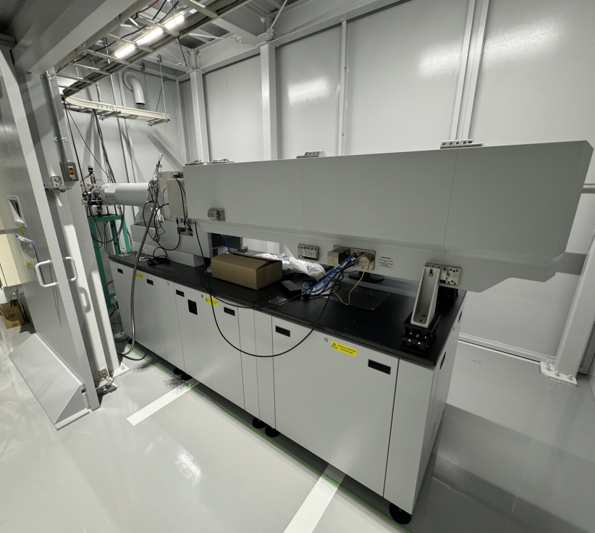
This is a SAXSpoint 5.0 small-angle scattering instrument (custom specifications) manufactured by Anton Paar. This instrument can perform scattering diffraction experiments using 8.0 keV (1.55 Å) or 13.1 keV (0.947Å). EIGER2 S 1M-BL-08 (DECTRIS, pixel size 75 μm × 75 μm, detection area 77.1 mm × 79.7 mm) is used as the detector. The camera length can be selected from 60 mm to 1600 mm, enabling structural evaluation from several Å to about 100 nm. The camera length can be changed in about 1 minute. Temperature conditions from -10°C to 120°C and grazing incidence conditions are also possible. Solution measurements using capillaries and cells for solutions are also prepared.
BL08W XAFS
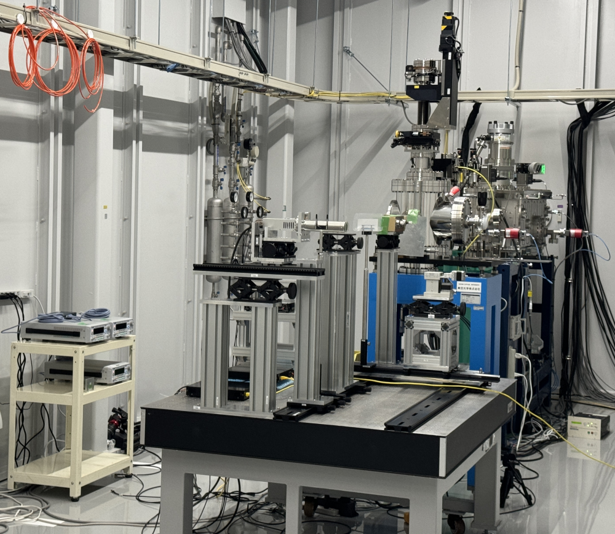
The equipment installed on the blue mount is the vacuum XAFS apparatus (tender energy region), and the one installed on the surface plate is the atmospheric XAFS apparatus (hard energy region). The vacuum XAFS apparatus and the atmospheric XAFS apparatus are installed in series on the beamline optical axis. BL08W-XAFS uses a multipole wiggler as a light source. It is a beamline that analyzes the chemical state and local structure of atoms in materials by X-ray absorption spectroscopy using energies from 2.1 keV in the tender region to 13.0 keV in the hard region with a double crystal monochromator (spectroscopic crystal is Si(111)). In the tender region, total electron yield and fluorescence methods are possible, and in the hard region, transmission, conversion electron yield, and fluorescence methods are possible. In the hard region, user-brought equipment can be installed, and in-situ measurements are also envisioned if the user has sufficient skills.
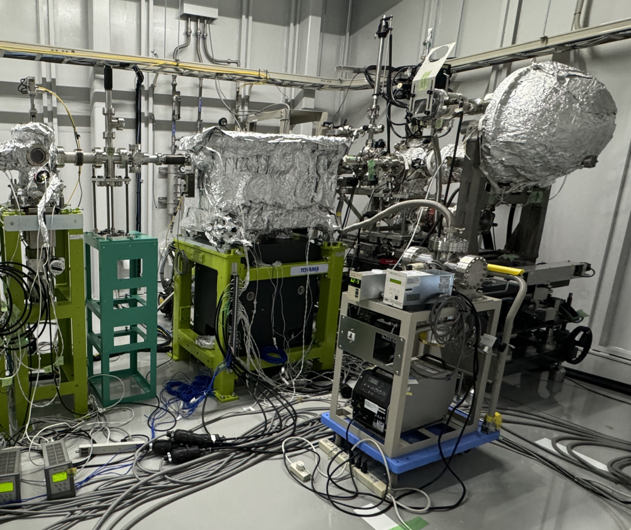
BL09U HAXPES
Hard X-ray Photoelectron Spectroscopy instrument. Detailed information is not provided.
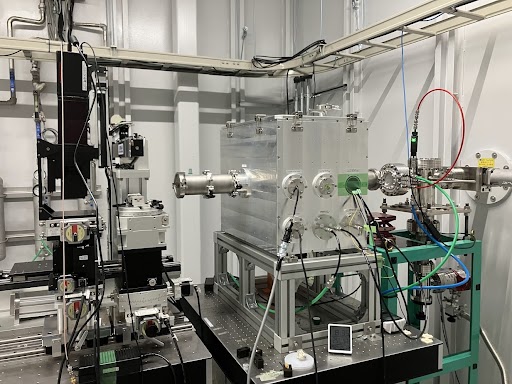
BL09W 白色X線CT・白色X-ray Imaging装置
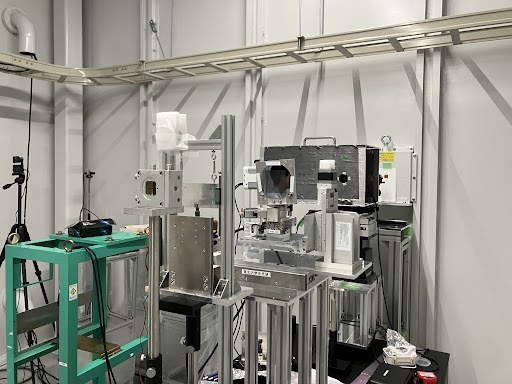
BL09W White X-ray 4D-CT
This is an instrument capable of realizing high-speed sample rotation 4D X-ray CT (advanced measurement) using hard X-ray white synchrotron radiation, from which primarily 30 keV or higher has been cut by an upstream flat mirror. The field of view is about 5 mm square, the pixel size is 5 μm, and the sample rotation direction can correspond to either the vertical or horizontal direction. The frame rate of the X-ray image detector can be selected from 12,800 frames/sec at 1024 x 1024 pixels (FASTCAM Nova S12 manufactured by Photron) or 65,940 frames/sec (Phantom TMX6410 manufactured by Vision Research). The temporal resolution of 4D X-ray CT is determined by the value of the number of projections per 180° divided by the frame rate. *Consultation is required for X-ray phase contrast CT and high-speed sample rotation equipment.
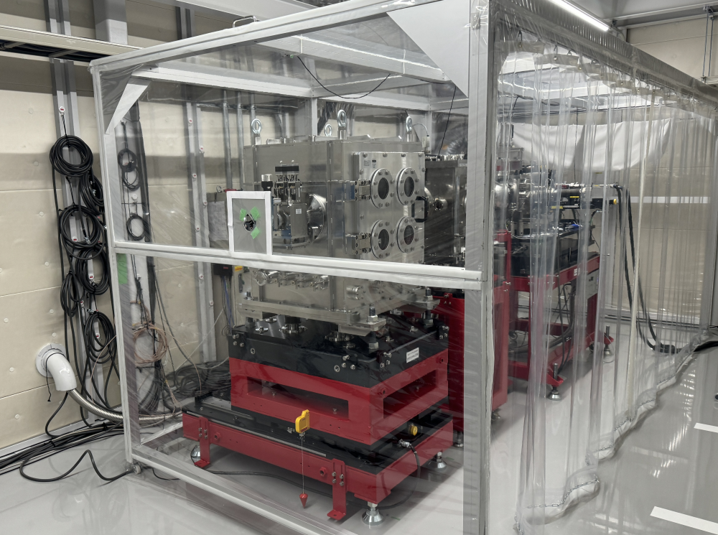
BL10U Ptychography
This is an instrument capable of ptychography measurements. By performing phase retrieval calculations on the diffraction intensity patterns obtained using this instrument, it is possible to image the sample with a field of view of about 10 μm and a spatial resolution of several tens of nm. Currently, a Fresnel zone plate is used as the focusing element, and an EIGER 1M-RW (manufactured by DECTRIS) is used as the image detector, and the sample is placed in a vacuum chamber evacuated to about 1 Pa. During this fiscal year, an apparatus that can place the sample in the open air, an Advanced Kirkpatrick-Baez focusing mirror as the focusing element, and a CITIUS 840k as the image detector are scheduled to be introduced.